
The story behind Ruby Vanguard · A case study
Finding my
way forward.
A personal case study in design, AI-assisted music, and learning as I go.
It started with one questionI never planned to make music. My creative world was graphic design and crafting. Then a coworker made a song about work, and I asked her how she had done it.
Her answer was Suno.
That small moment of curiosity led to Ruby Vanguard: music, a visual identity, a website, and a way to express experiences I was struggling to explain. Along the way, I learned to direct unfamiliar tools, rethink ideas, follow release requirements, and recognize when I needed to start smaller.
There was also a fair amount of swearing.
- My contribution
- Concepts, creative direction, critique, selection, and release preparation.
- The tools
- Suno, ChatGPT, Gemini, and a growing set of video and audio tools.
- The work
- Music, artwork, an artist identity, and a website to bring it together.
From experimenting to having something to say.
I started with Suno’s free version. I described what I wanted a song to be about, and it generated lyrics and music. At first, I was just messing around and getting to know it.
After a few generations, I wondered what the paid version could do. I think I lasted about two weeks before subscribing.
By then, I was already thinking about making music about my illness.
I initially used my husband’s ChatGPT account to explore lyrics. I described my experiences and the ideas I wanted a song to express. When the lyrics captured what I was trying to say, I couldn’t wait to take them into Suno and hear them come alive.
I believe one of my first songs was a heavy metal track called “Chronic Illness.” Eventually, I got my own subscriptions to ChatGPT and Gemini. More songs followed, and I realized they could become an album.
That was the beginning of The Cage.
What I brought to the process
AI generated music, lyrics, and artwork from the direction I provided. My contribution began with my experiences, ideas, and the feeling I wanted the work to carry. It continued through listening, choosing, questioning, and asking for changes.
I liked my songs. Obviously, I knew being mine might have something to do with that.
But I also tried to listen as though they belonged to another artist. If something bothered me, I changed it. If I wanted a particular sound, I kept working toward it.
A name. A direction.
A world of its own.
I needed an artist name, so I asked AI for suggestions. “Ruby Vanguard” caught my attention. I had to look up “vanguard.” What stayed with me was the idea of moving forward.
That was what I was trying to do. Move forward. The name stayed.
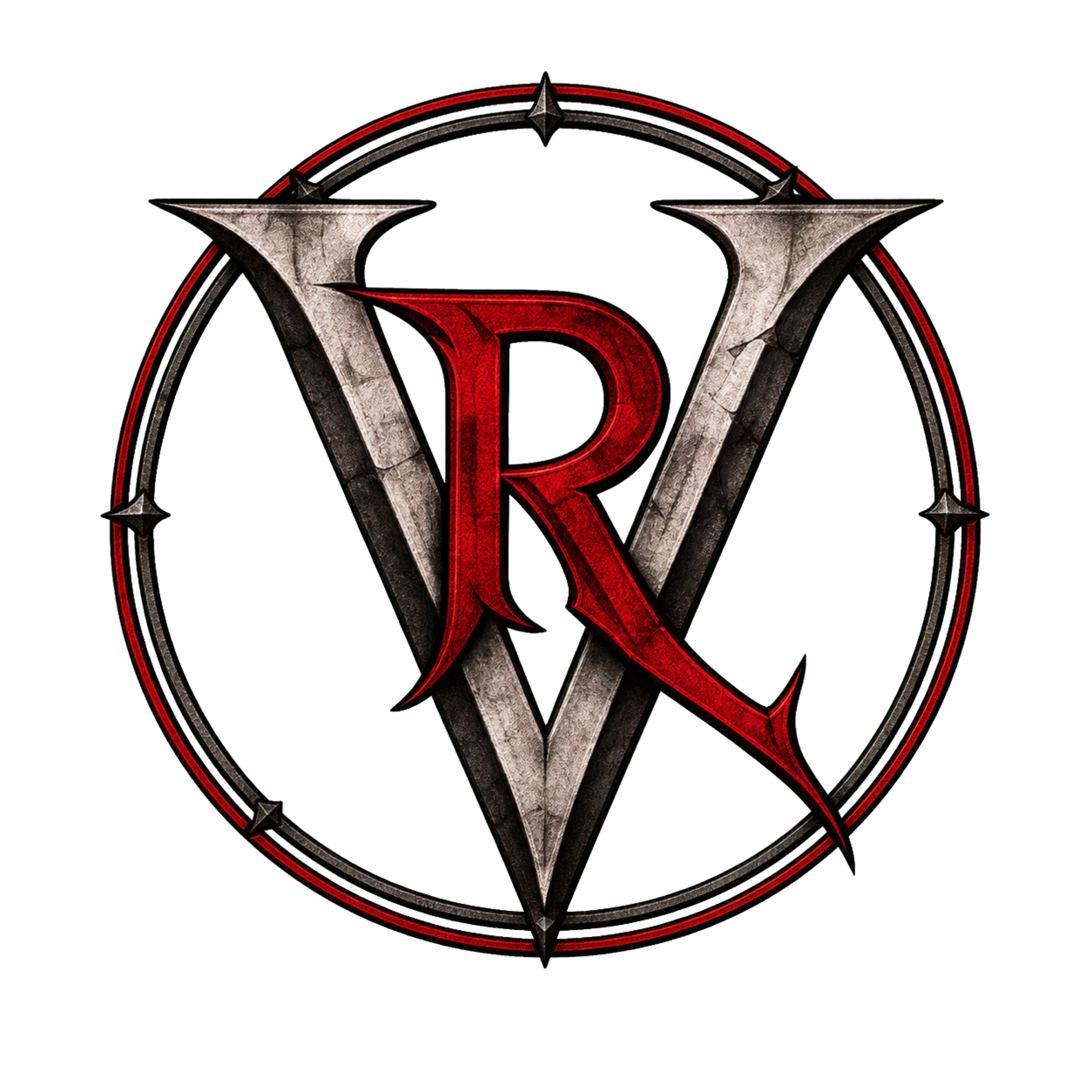
As a graphic designer, I knew Ruby Vanguard would need a logo, colors, backgrounds, and typography. I started with a personal logo I had previously created: an “R” in American Typewriter inside a circle that resembled a typewriter key. To me, it represented graphic design.
I gave that logo to AI as a reference and asked for variations for Ruby Vanguard. One became the logo I use today.

Learning to describe the picture in my head
Each song had something different to say, but its artwork still needed to fit the feeling of the song and album. I wasn’t manually creating the finished images. I was bringing art direction.
At first, I expected AI to figure out my vision. Some artwork took several attempts, just as the music did. Eventually, I learned to give much more detail. Being able to imagine something and being able to explain it were two different skills.
The feeling behind the image
“It hurts like HELL!”
And a whole lot of other curse words.
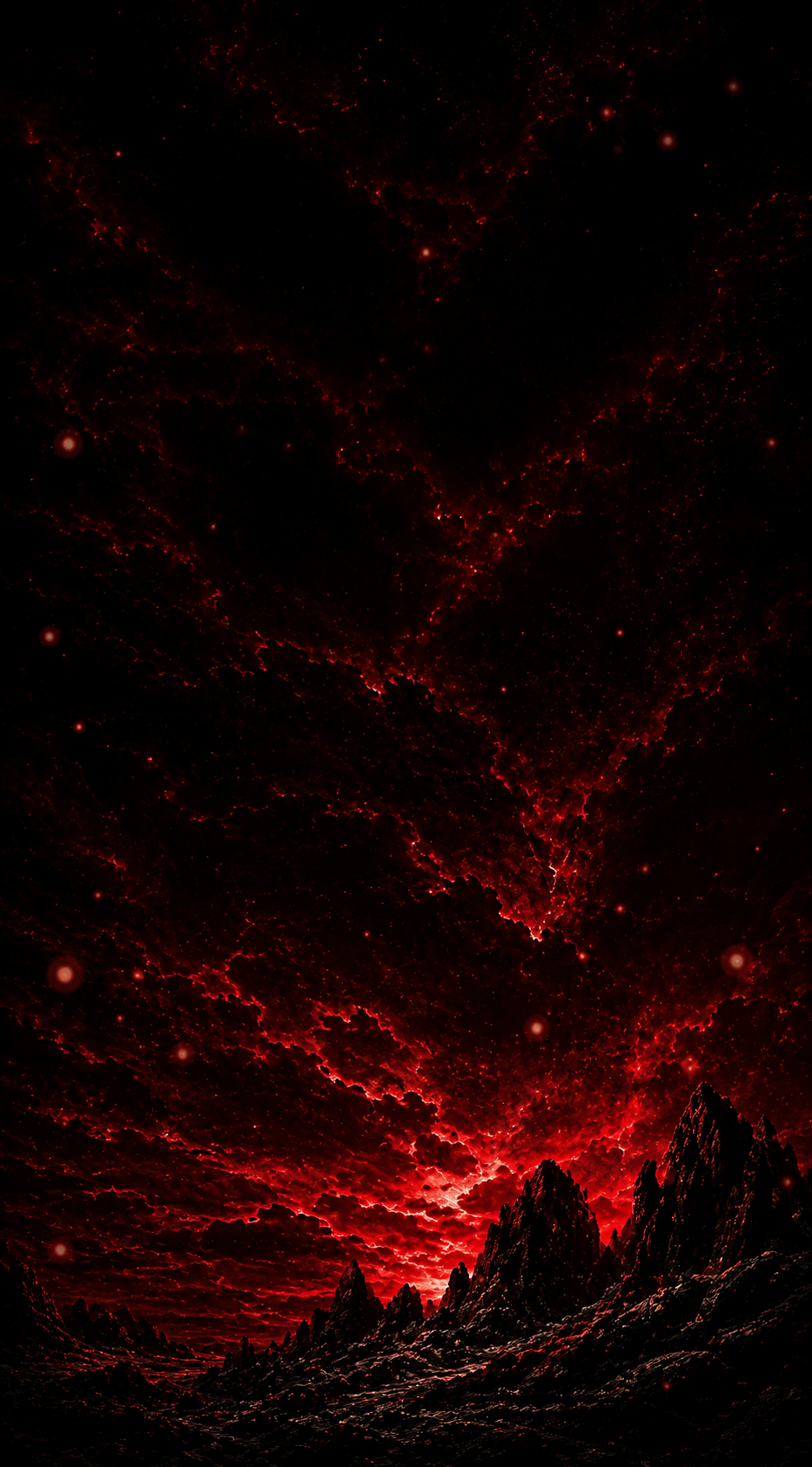
The colors were an easy decision. Red connected to Ruby. Black represented illness for me.
For the background, I asked AI to build on those elements. One image showed dark, rugged terrain, red that looked like lava, and small glowing orbs that resembled embers.
It had to grow on me. Eventually, I understood why it belonged. The terrain reflected how I felt: uneven, unpredictable, and never-ending. The red represented pain.
The logo connected to my design background. The colors and landscape connected to the experience behind the music.
Revisiting
“Did You Think…”
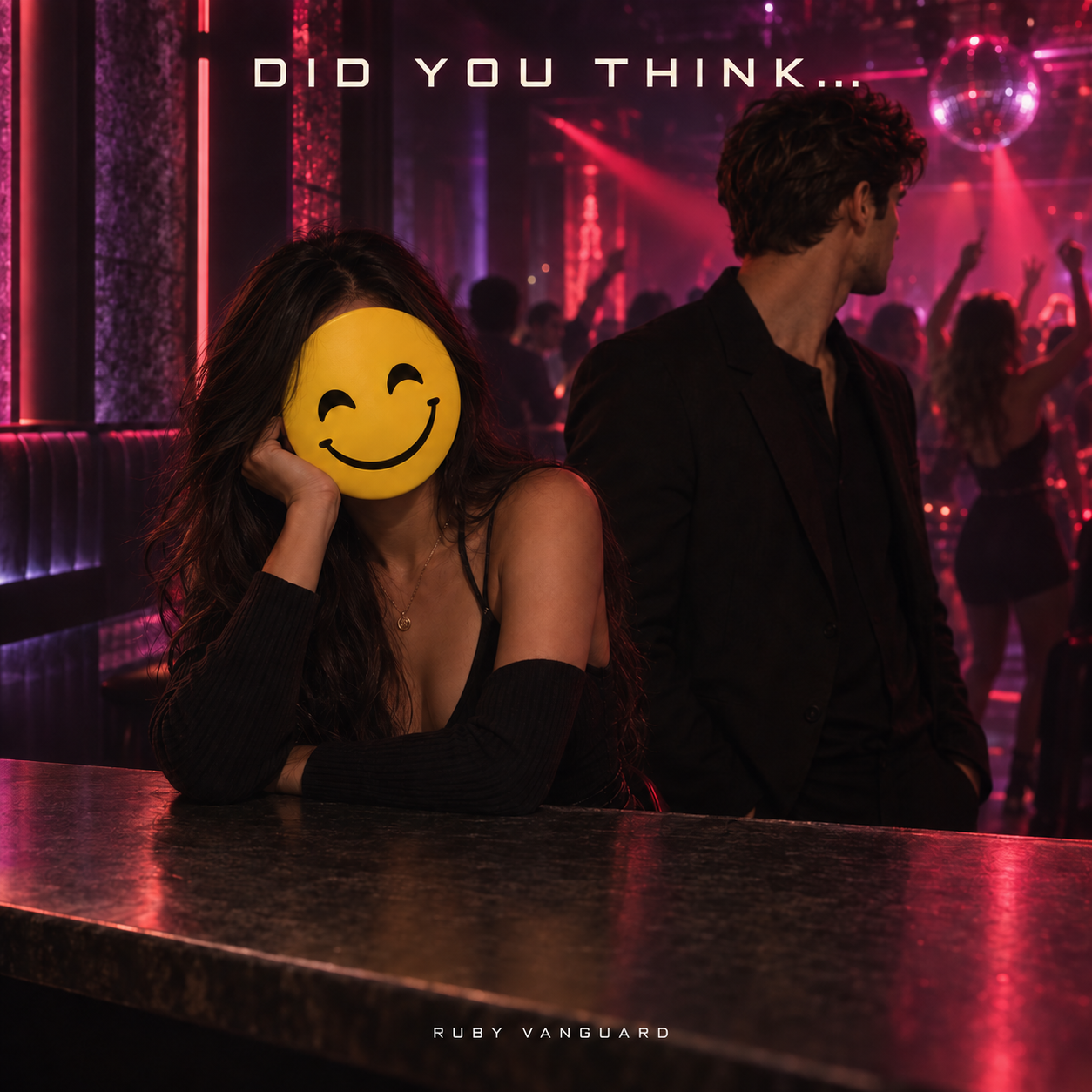
“Did You Think…” came from feeling that people close to me didn’t understand what I was going through. There was an expectation that I would heal quickly and get back to life. That wasn’t what happened.
I wanted a dubstep/club-style track. Suno generated lyrics and a short song that repeated itself quite a bit. Initially, that worked for me. Club music didn’t necessarily need a lot of lyrics.
But it didn’t fit the albums I was making, so I put it aside.
Later, after creating songs with a similar feel, I realized it had a home. Listening again, I wanted it to tell more of the story.
I returned to the lyrics and developed them around the frustration of feeling misunderstood while living with illness. I took the revised lyrics back into Suno and remade the song. That version made it onto the album.
Revisiting it let me bring what I had learned to an idea that still mattered to me.
Giving someone else
the chance to hear it.
With each album I made, the desire to share the music grew. I asked AI to research distributors and compare options for a beginner. I chose DistroKid. I don’t remember every reason I ruled out the alternatives, but affordability, ease of use, and delivery to Spotify and Apple Music mattered to me.
Knowing how to release music didn’t mean I immediately committed. Another expense on top of my subscriptions was a real consideration. Was it worth it?
I took a few months to decide. During that time, I developed the branding and started thinking about promotion. Eventually, the thought of no one hearing these songs pushed me to take the chance.
With help from my AI assistant, Watson, I worked through the release process, including uploading music and preparing artwork to the required dimensions.
A home for the music—and its stories
While preparing releases, I noticed an option asking whether I wanted to make a website. I clicked it and asked for a site that could play my music.
It started with Home, About, Music, and Contact. I purchased a domain name. It didn’t stay simple for long.
We added Upcoming and New Release sections, changed the music area to previews, and included links to Spotify and Apple Music. Then we added a blog. I wanted somewhere to tell the stories behind the songs in my own words.
The website grew as I understood more about what I wanted to share and how listeners could find it.
Explore Ruby Vanguard StudioLearning to start smaller.
And keep going.
At first, I thought I would make music, get it onto Spotify, and voilà—sales. I had a lot to learn.
I developed more specific ways to direct lyrics and musical arrangements. I returned to After Effects and began learning Premiere, Audition, and Google Flow.
There were frustrations everywhere. Suno added audience sounds or “oohs” and “aahs” I hadn’t wanted. Flow generated visual errors. Sometimes, in the editing software, I couldn’t even find the tool I needed.
I tried to create a whole music video in Flow and realized I was taking on too much at once. I needed to crawl before walking. I scaled it back and made a video using a static image.
That gave me something I could finish while continuing to learn.
The more I worked, the better I became at explaining what I wanted, recognizing problems, and deciding what to do next.
What came of it.
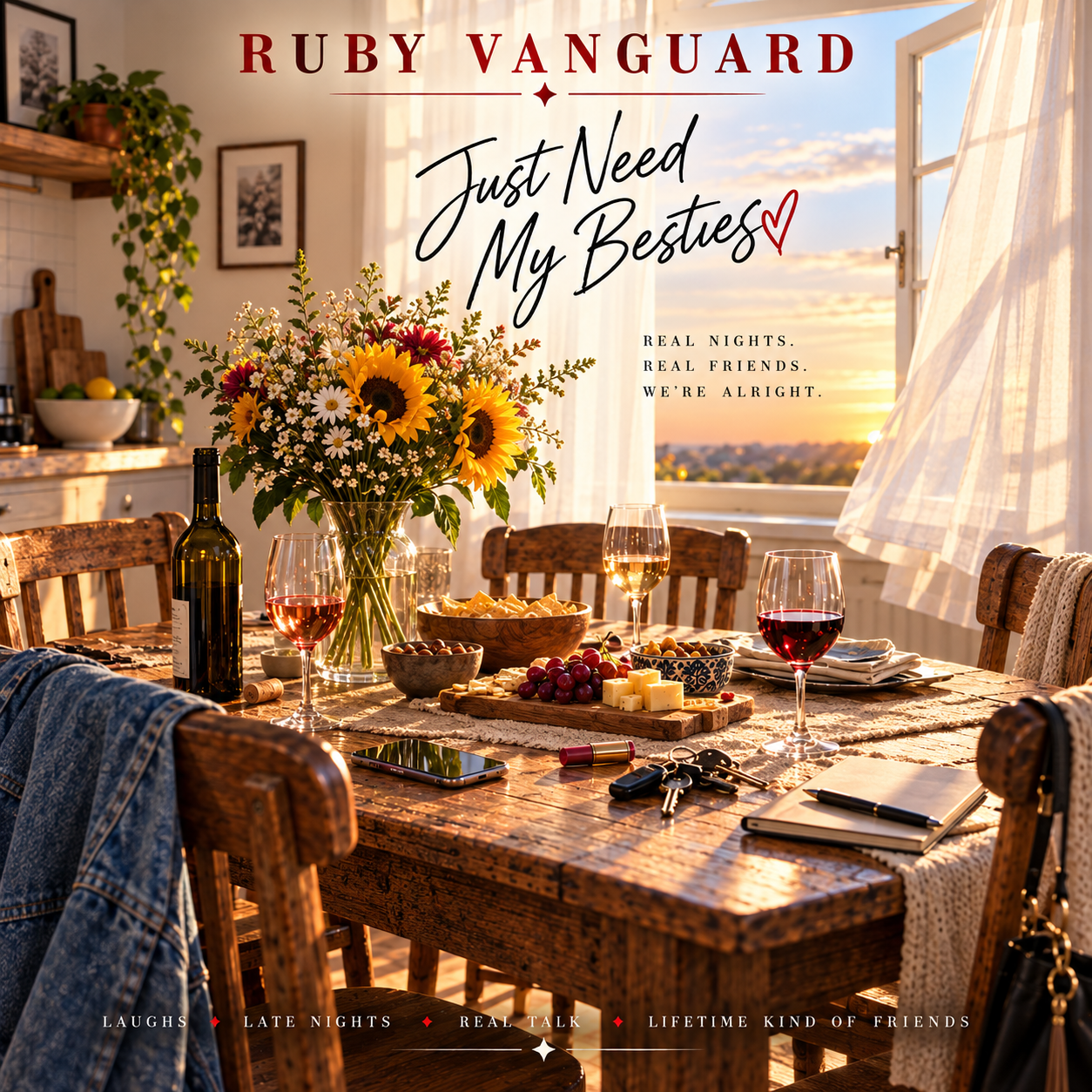
By October 4, 2026, I had released two albums: The Cage and the country album Just Need My Besties, along with singles from the albums. Ruby Vanguard also had a visual identity, an artist website, music previews, release links, and a blog.

Why I’m sharing this
For potential employers and clients, this project offers a practical example of how I work: I learn unfamiliar tools, bring creative direction, follow requirements, adapt when an approach fails, and keep working toward a finished result.
For listeners, I hope it offers encouragement and a sense of being understood—especially for anyone living with illness or facing something overwhelming.
I wouldn’t want anyone to read this as another demand to be productive while they’re struggling. This is simply what I found my way into, starting with curiosity and learning a little at a time.
I’m still learning.
Ruby Vanguard is part of how I’m moving forward.